Water resistance change with voltage
I saw a video of a ship’s electrician replacing a 24V power supply because it kept blowing. He measured the circuit, with a multimeter, at 70k Ohms, and declared that meant bad insulation resistance. Probably water in some equipment. 70 kΩ would draw about 0.3mA at 24V though, so for this to blow a 3A supply the resistance at 24V would have to be much lower. Maybe something like at least 100mA needed to matter, unless the supply was really fully loaded already. That would mean 240R or lower.
I checked the test voltage of a couple of multimeters in ohms range and found they were about half to one volt. So, can the resistance drop from 70k to a few hundred ohms when applied voltage goes from 0.5V to 24V?
I stuck some copper wires in some glasses of water, trying both fresh tap water, and the same with added salt. If I just wanted to know the water resistance, it would be better to use some less reactive electrode. What I really want though is a rough simulation of some copper wires in a wet junction box on a ship, so really some dirty oily brine, with a bit of steel around would be about right.
I programmed a power supply to step voltage, staying on each voltage for a second, and measured current with a multimeter. I changed the range from uA to mA at either 1V or 2V, so you may see a step in the data there when the ammeter resistor changes from 100R to 2R. I did not allow for voltage drop in the meter - voltage is measured at the supply.
I include a couple of graphs below, but note that there was a large variance between runs. Take them, especially the second one, with a pinch of salt. :)
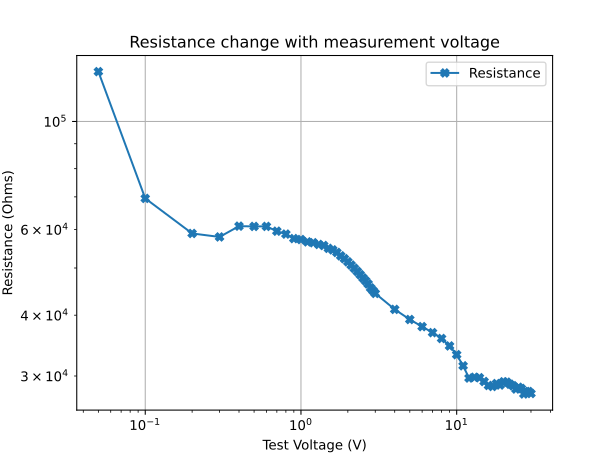
Fresh water:
Salt water:
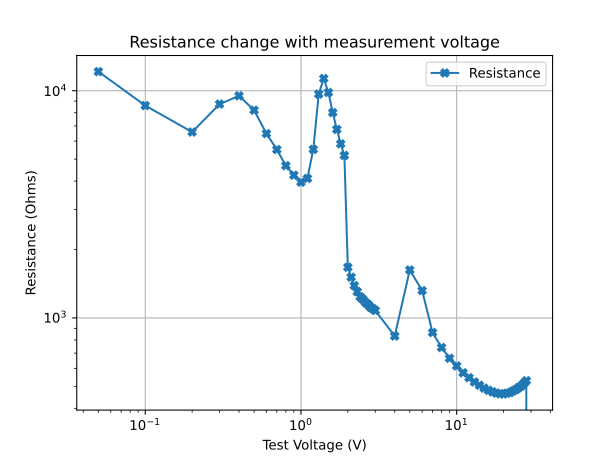
The results varied quite a lot between runs, but the general shape seems somewhat repeatable. The solution seemed to become more conductive after current was passed through it. The electrodes of course reacted. The anode picked up a yellowish coating, and when dried off, I found this was high resistance (no reading on ohmmeter). Later I tried with nails as one or both electrodes (looked like zinc plated).
On the first fresh water run, the resistance dropped from around 60k to 30k, when the voltage was changed from about half a volt to 24V. 2nd run: 50k to around 20k. 3rd: 50k to 20k. There was a big drop in resistance from 11V to 12V, of about 6 kΩ.
So, it seems resistance does drop with voltage, but in this test far less than necessary to explain the measurements on the ship. Also, I’ve not allowed for the conductivity of the solution changing over the course of the test, because of chemical reactions, so it’s not just the voltage changing. Maybe it would be different if the solution is electrolysed for longer first, as it might be with a wet motor on a ship. Maybe there are other metals involved, or effects from oil or other contaminants.
Conclusion: water is complicated, electrochemistry is complicated, there are too many factors to allow for in a quick test. However, I am reasonably satisfied that the resistance of water can go down as voltage is increased.